
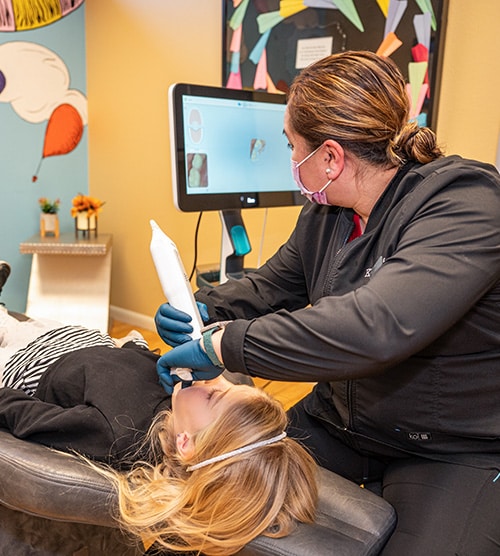
Reznik Orthodontics uses iTero digital scanning and 3D imaging to support accurate diagnosis, comfortable records, and detailed orthodontic treatment planning. Both the Odessa and Midland offices use the same technology, so patients receive the same tools and planning support at either location.
Technology does not replace the doctor’s diagnosis. It gives our orthodontists better information, helps patients understand their treatment more clearly, and makes records and treatment planning more comfortable.
iTero digital scanning
iTero digital scanning replaces traditional putty impressions with a small handheld scanner. The scanner creates a 3D model of your teeth and bite, allowing the doctors to evaluate your smile without using impression material.
This helps make the records process more comfortable and easier to understand. The scan appears on screen, so you can see your teeth and bite from angles that are difficult to see in a mirror.
Digital scanning can help with:
Braces records and treatment planning
Invisalign treatment planning
Digital models of the teeth and bite
Easier patient education during the consultation
Faster digital transfer when appliances or aligners need to be made
For patients considering Invisalign, the scan may also be used to create a digital treatment simulation and support aligner planning.
3D imaging and CBCT
Some cases need more detailed information than a standard dental X-ray can provide. When it is clinically useful, 3D imaging gives the doctors a closer look at the teeth, roots, jaws, and surrounding structures.
This can be helpful for:
Impacted teeth
Unusual root positions
Complex or retreatment cases
Bite concerns that need more detailed planning
Surgical orthodontics coordinated with an oral surgeon
3D imaging is recommended based on the needs of the case. The doctors use it when that added detail helps with diagnosis, planning, or treatment decisions.
What this means for patients
The main benefit of technology is better information and a more comfortable process.
For patients, this can mean:
No traditional putty impressions for digital models
Clearer visuals during the consultation
More detailed records for treatment planning
Better information for braces, Invisalign, and complex cases
These tools help make treatment planning more precise, but the treatment plan still comes from the doctor’s diagnosis and clinical judgment.
Doctor-Led diagnosis and planning
Technology is only useful when it supports the right diagnosis. At Reznik Orthodontics, treatment planning is led by board-certified orthodontists who evaluate the records, explain the findings, and recommend the best next step for each patient.
Dr. Megan Reznik, Dr. Derek Reznik, and Dr. Michael Reznik are Diplomates of the American Board of Orthodontics. Their training and experience guide how the technology is used, what the records mean, and which treatment options make sense for each case. See board certification for more information.
Schedule your appointment
Call the Odessa office at (432) 333-7105 or the Midland office at (432) 682-1222, or request an appointment online.
Frequently Asked Questions
Does a digital scan hurt or make me gag?
No. Nothing sets in your mouth and nothing is held in place. The wand passes over the teeth while you breathe and swallow normally, and it can be paused at any point.
How much radiation is involved in 3D imaging?
A cone beam scan involves radiation, which is why it is taken only when the case calls for it rather than as a routine record. The doctors will explain why they are recommending one before it is taken.
Can I see what my teeth will look like before I start?
For aligner cases, yes. The digital scan supports an on-screen simulation of the expected outcome. It is a projection based on the treatment plan, not a guarantee, and the doctor will tell you where the plan can vary.