What licensed, specialist and board certified actually mean
Three different things, in order.
- Licensed means the state permits someone to practice dentistry. Every dentist has this.
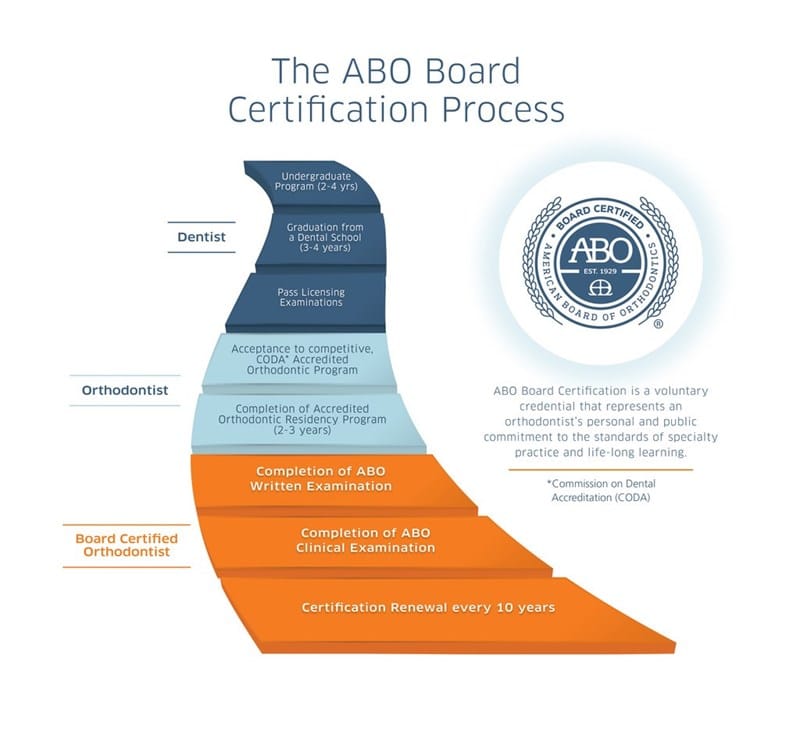
- Specialist means the dentist completed a full-time orthodontic residency after dental school, typically two to three years, in tooth movement and jaw development. That is what makes someone an orthodontist rather than a dentist who does braces. Both Dr. Megan Reznik and Dr. Derek Reznik completed their orthodontic residency at the University of Texas Dental Branch in Houston, finishing in 2007.
- Board-certified means the orthodontist then went through the American Board of Orthodontics examination process, voluntarily, and passed it.
Nobody is required to do the third one. It is the only one that involves an outside body looking at your actual work.
What the ABO process involves
The American Board of Orthodontics was founded in 1929 and is the oldest specialty board in dentistry. It’s the only certifying board in orthodontics recognized by the American Dental Association, so there’s no second, easier board to point to.
Certification runs in three stages:
- Written examination — 240 questions covering every area an orthodontist should know.
- Clinical examination — the candidate presents detailed case reports on patients they treated themselves, chosen to cover a broad range of problems. A panel of examiners reviews those cases.
- Oral examination — that same panel questions the candidate directly.
Certification is time-limited. An orthodontist renews every ten years by showing the standard has held.
The part that matters to a patient is the middle stage. A written exam tests what someone knows. The clinical examination tests what they actually did to real patients, judged by people with no reason to be generous.
Is it better to get braces from a dentist or an orthodontist?
Both can legally provide orthodontic treatment in Texas, and in Odessa and Midland both do. General dentists currently rank at or near the top of local search results for aligner and braces terms.
The honest answer is that it depends on the case, and most patients cannot tell in advance which sort they have.
A straightforward crowding correction is within reach of a well-trained general dentist.
A bite that needs correcting, teeth that must move through difficult positions, an impacted tooth, a growing child whose jaw relationship is off, or a case that starts going sideways in month eight is where the extra years of residency stop being an abstraction.
That is the real argument for a specialist: not the treatment that goes to plan, but the one that does not.
Ask any provider two questions:
- How many years of full-time orthodontic residency did you complete?
- Are you board certified?
Both are fair questions.
Who treats you here

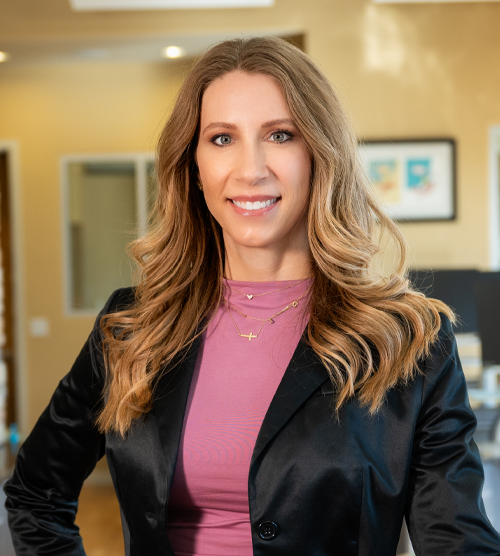
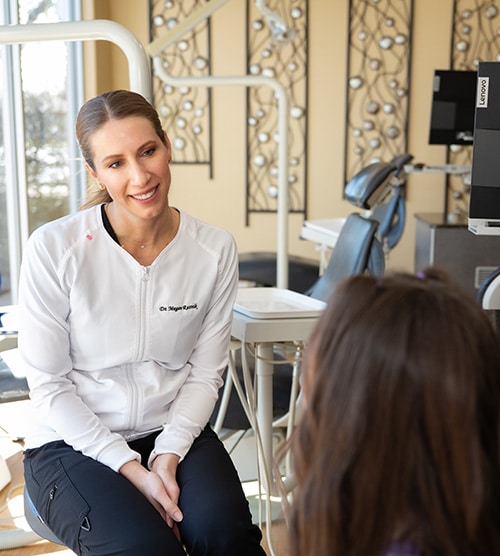
Dr. Megan Reznik Diplomate of the American Board of Orthodontics. BS from the University of Kentucky, DDS and MS from the University of Texas Dental Branch in Houston, where she graduated first in her dental school class in 2005 and served as head resident during her orthodontic residency from 2005 to 2007. Member of the American Association of Orthodontists, the American Dental Association, the Texas Dental Association, the Texas Association of Orthodontists and the Permian Basin Dental Society. Full bio.
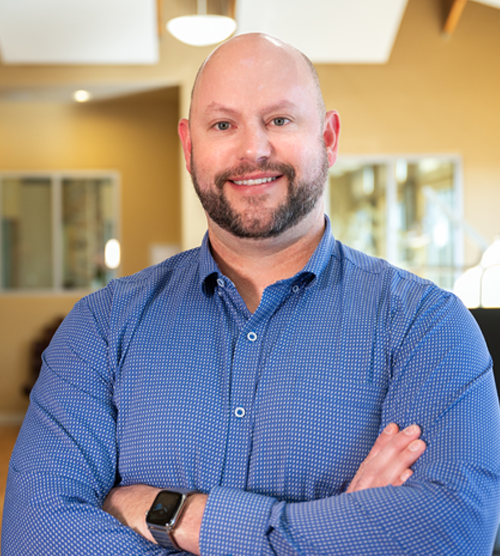
Dr. Derek Reznik Diplomate of the American Board of Orthodontics. BS from Southwest Texas State University in San Marcos, DDS and MS from the University of Texas Dental Branch in Houston, orthodontic residency there from 2005 to 2007. Past president of the Permian Basin Dental Society, and a member of the same professional associations. Full bio.
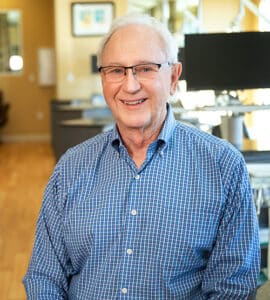
Both doctors treat patients at both the Odessa office and the Midland office.
What certification does not tell you
It’s worth being clear about the limits of any credential, including this one.
Board certification says an orthodontist submitted finished cases to a national panel and passed. It does not tell you:
- Whether the practice runs on time
- Whether the person who quotes you is the person who treats you
- Whether the fee is put in writing before you commit
- Whether anyone will pick up the phone when a bracket comes off
Those things matter to how treatment actually feels, and none of them appears on a certificate.
The reason to check for certification anyway is that it’s the one signal on the list you can verify independently, from a public register, without taking anybody’s word for it. Treat it as a floor rather than a conclusion, and ask the rest of the questions at the consultation.
Why it matters more on some cases than others
For a straightforward crowding correction, the difference between providers is small, and plenty of general dentists produce good results.
The gap opens on the cases that are harder to see coming: a bite that has to be corrected rather than a set of teeth that has to be straightened, an impacted tooth, a growing child whose jaw relationship is off, a case that needs coordinating with an oral surgeon, or a treatment that stops progressing in month eight and needs somebody to work out why. Those are the cases the ABO clinical examination is built around, because it judges finished results rather than knowledge.
Book a free consultation
Call the Odessa office at (432) 333-7105 or the Midland office at (432) 682-1222, or request an appointment online. The consultation is free, and it ends with a diagnosis, a plan and a fee in writing.
Frequently Asked Questions
How can I check whether an orthodontist is board certified?
The American Board of Orthodontics publishes a public locator of certified orthodontists, searchable by name and location. Do not rely on a website’s wording; the phrase “board certified” is sometimes used loosely, and the register is the check.
Does board certification change how my treatment is done?
Not procedurally. What it changes is what stands behind the treatment plan: an orthodontist who has had their own finished cases judged against a national standard, and who renews that judgment every decade.
Is board certification the same as being a specialist?
No, and this is the most common confusion. Specialist status comes from completing an orthodontic residency. Board certification is an additional, voluntary examination taken afterward. An orthodontist can be a specialist without being board certified.
Should I choose an orthodontist on certification alone?
No. It is one signal among several, alongside how the practice explains your options, whether the fee and payment terms are put in writing before you commit, and whether the person quoting you will be the person treating you. It’s the signal that is easiest to verify independently.